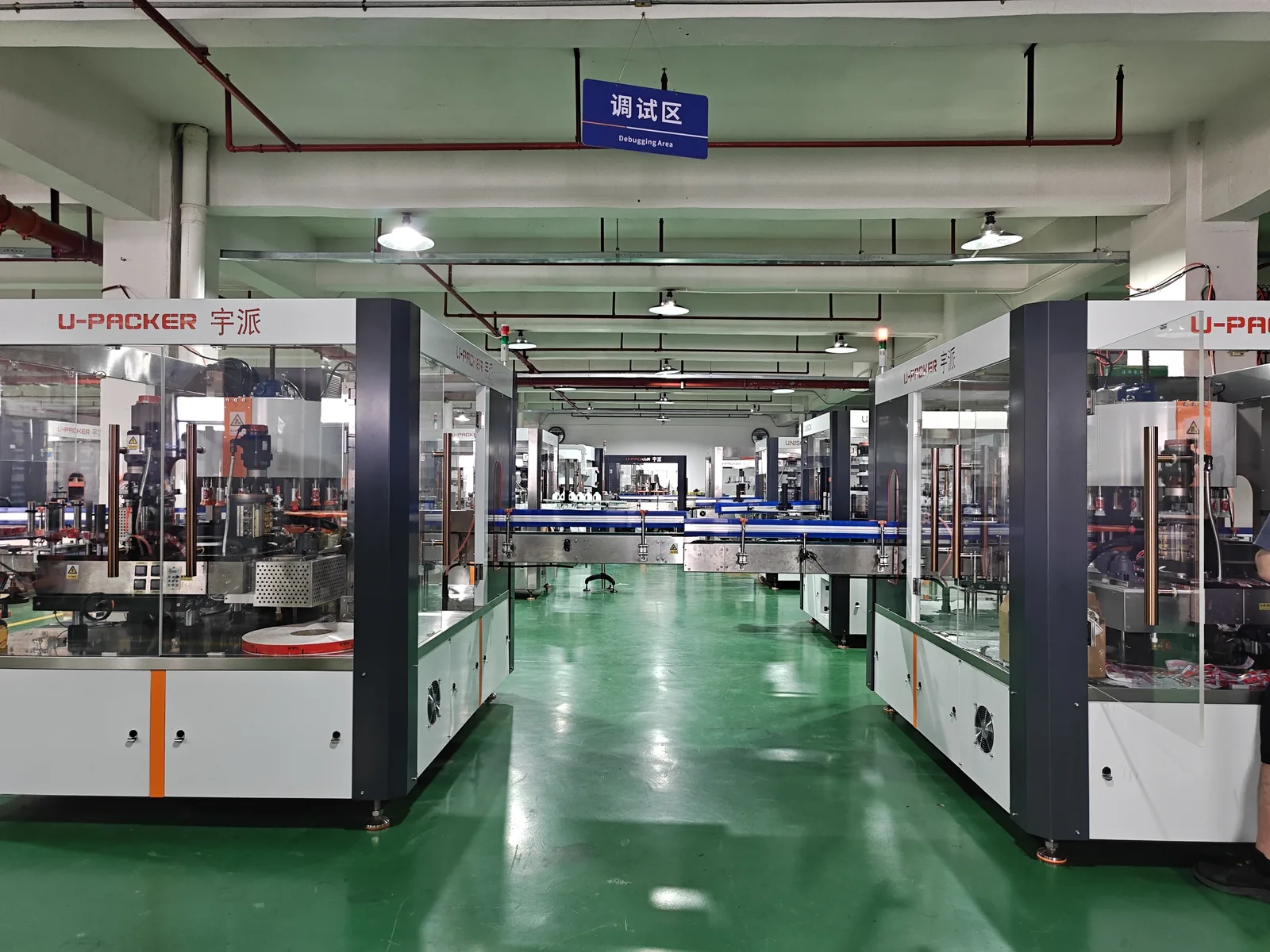
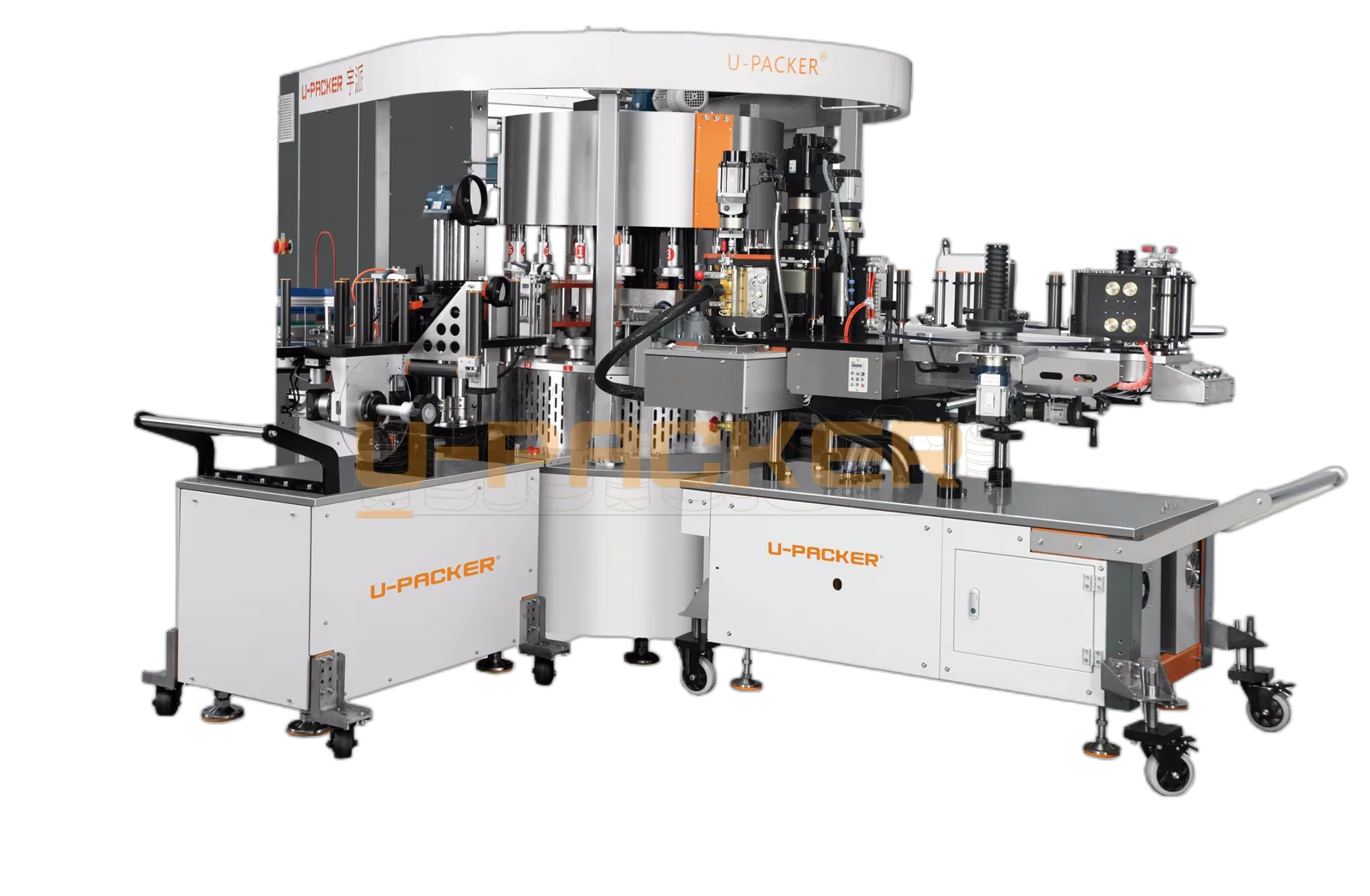
A can labeling machine is an automatic labeler built to apply labels to round metal cans - food cans, milk powder cans, pet food tins and beverage tins - and for round cans the standard process is wrap-around labeling: a roll-fed film or paper label is cut to length, wrapped 360 degrees around the can and bonded with hot melt glue applied only at the label's leading and trailing edges. On U-Packer rotary machines the process runs from 1,200 to 58,000 cans per hour at ±1mm placement accuracy on tinplate and aluminum surfaces, using OPP film, pearl film or paper-plastic composite labels; roll-fed film typically costs 30-50% less per printed area than die-cut self-adhesive stock. A wrap around labeling machine for cans needs no heat-shrink tunnel - the label does not shrink - and glues only the two label ends, so glue consumption stays low; what it asks in return is a round can, a stable infeed and the label length and overlap stated in the RFQ.
Who labels cans, and what they need
Canned food packers - tomatoes, beans, sweet corn, pet food - run one or a few SKUs at high volume and standard can formats (a common size ladder runs from ~ diameter 73 mm to 153 mm). Their priority is cost per can: full-body paper or film wrap labels at the lowest material price, which is why wrap-around hot melt has been the food-can standard for decades. Metal cans and canning practice are documented by the tin can industry references.
Milk powder and nutritional powder canners label larger, taller cans where a full-wrap label carries regulatory text and branding in one piece; label overlap and edge placement matter more than raw speed, and the ±1mm registration of a rotary wrap labeler keeps front-panel artwork facing the shopper.
Contract packers and co-manufacturers change can formats weekly; for them the machine decision rides on changeover - format parts and label roll swaps measured in minutes, with per-format parameter recipes on electronic cam models.
Wrap-around vs self-adhesive labels on cans
| Factor | Wrap-around (hot melt film/paper) | Self-adhesive (die-cut patch) |
|---|---|---|
| Look | Full-body 360° band, seamless | Front/back patches, any contour shape |
| Label cost | Lowest - roll-fed stock, typically 30-50% less per printed area | Higher - die-cut on backing paper |
| Glue | Hot melt at label ends only, 120-160 °C | None - pre-coated adhesive |
| Speed ceiling | Up to 58,000 bph on modular platforms | 12,000-18,000 bph rotary class |
| Shrink tunnel | Not needed | Not needed |
| Best for | Round cans at volume, cost-per-can focus | Shaped labels, short runs, multipacks |
Most can lines land on wrap-around; the exceptions are promotional patch labels and mixed-format plants already running self-adhesive lines. The full process comparison - including maintenance and the material economics - is in the hot melt vs self-adhesive guide, and the roll-fed film itself (OPP/BOPP) is covered by the OPP labeling machine hub. The same rotary platforms also serve glass containers: see the guides for wine bottles, jars and sauce bottles.
Machines matched to can lines
| Machine | Speed (bph) | Cans | Best for |
|---|---|---|---|
| Single-station rotary | 1,200 | Round cans and bottles | Entry canning lines, replacing hand labeling |
| Electronic cam rotary | 4,000-7,200 | Round, square, oval | Frequent can-format changes, per-SKU recipes |
| Mechanical cam rotary | 4,000-7,200 | Round, square, oval | One format at volume, lowest machine cost |
| Round-can carousel | Up to 36,000 | Round | Classic high-speed canning lines |
| Hot melt modular platform | Up to 58,000 | Round | New high-speed lines, 2-3 stations |
Size the labeler above the filler: a canning line running 20,000 cans per hour pairs with the 2420-class carousel with headroom, and the labeling capacity calculator converts filler output into the required class in one step. Glue spend per thousand cans is small - it is applied to two label ends only - and can be estimated with the hot melt glue cost calculator.
Wrap-around labeling on round cans, running
Rotary carousel applying wrap-around labels with hot melt glue (watch on YouTube):
Specify your inquiry
Send us your container specs for a matched machine and an itemized quotation: can drawings with diameter and height for every format, label artwork with label length and overlap for wrap-around, target cans per hour, can material - tinplate or aluminum - and destination market. U-Packer runs your cans and labels on the proposed machine before contract; every machine is built in the Guangzhou factory with a 30-day standard lead time.
Frequently asked questions
What is a wrap around labeling machine for cans?
It is an automatic labeler that wraps a roll-fed film or paper label 360 degrees around a round metal can and bonds it with hot melt glue applied only to the label's leading and trailing ends. On rotary machines the process runs 1,200-58,000 cans per hour at ±1mm accuracy on tinplate and aluminum, with roll-fed stock typically 30-50% cheaper per printed area than die-cut labels and no shrink tunnel needed.
Can a bottle labeling machine label cans?
If the can is round and the machine is a rotary wrap-around labeler, yes - the process is identical: infeed, wrap, glue at the label ends, ±1mm placement. What changes is the format parts - can chucks and guides sized to the can diameter and height - which is why can drawings belong in the RFQ. Square or irregular cans follow the same route as shaped bottles: dedicated stations on the cam rotaries.
Which label material is used for can labeling?
Roll-fed OPP film for high-volume beverage and food cans - 360 degrees of print area at the lowest material cost, and on PP-labeled packaging a mono-material plus for recycling. Pearl film and paper-plastic composite are chosen for matte or paper-look branding; all three run on the same rotary machines, because what matters to the machine is that the material arrives printed in roll form.
How fast can a can labeling machine run?
The ladder: single-station rotary 1,200 bph; electronic and mechanical cam rotaries 4,000-7,200 bph; the round-can carousel up to 36,000 bph; modular hot melt platforms up to 58,000 bph. Match the class to your filler with 15-20% headroom - the labeling capacity calculator converts filler output into the required class in one step.
How much does a can labeling machine cost?
Dedicated rotary wrap-around machines are quoted per configuration from around USD 50,000, and modular high-speed platforms from around USD 100,000 - market orientation bands; the configuration is driven by can formats, stations and speed class. Budget label material as the larger lifetime line: the 30-50% per-area gap between die-cut and roll-fed stock usually outweighs machine price differences. The price guide explains what an itemized quotation contains.