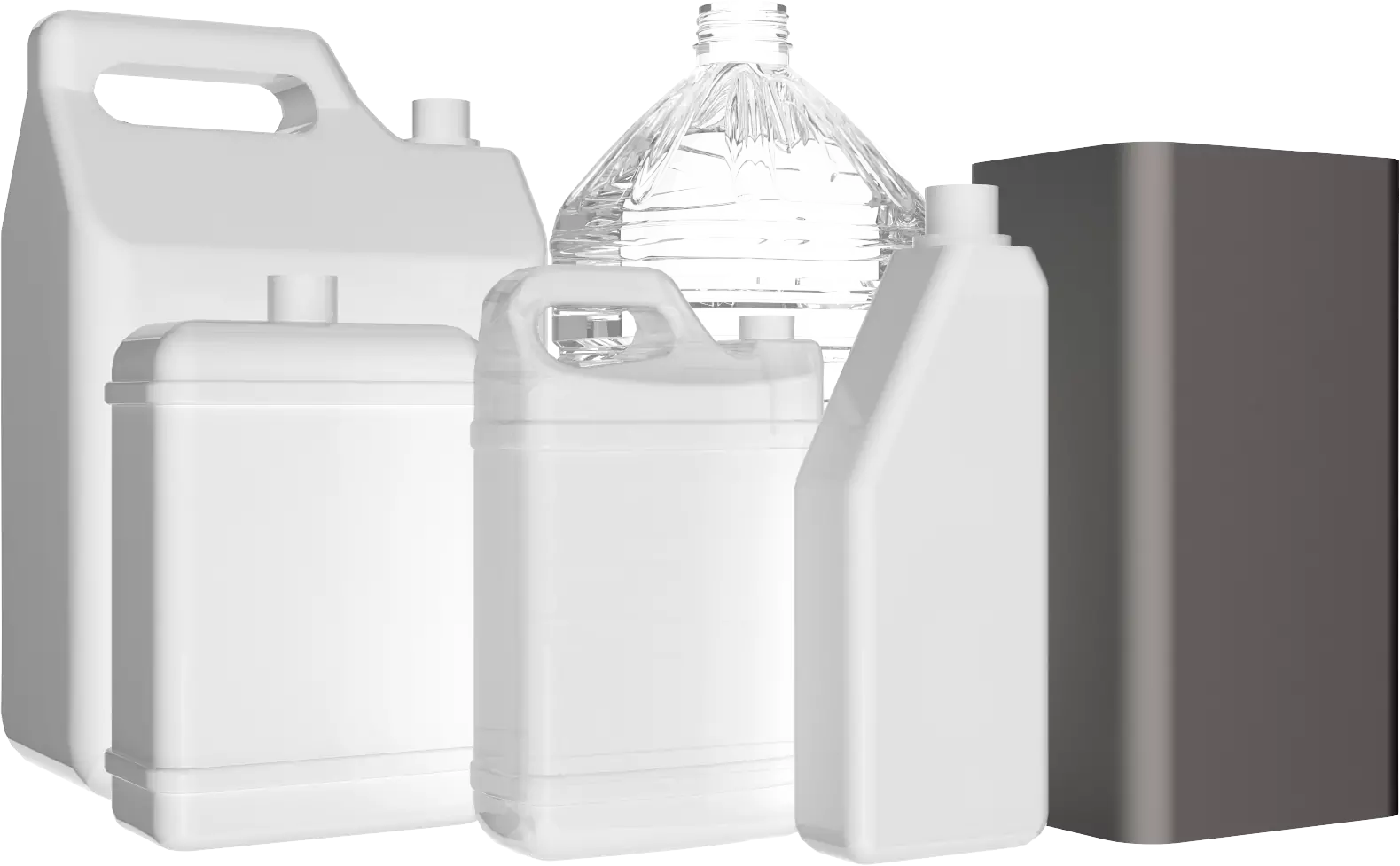
A square bottle labeling machine (also called a square bottle labeler machine) labels square, rectangular and flat containers - edible oil bottles, sauce and condiment bottles, detergent and daily-chemical packs are the most common applications. The challenge with square bottles is orientation and flatness, not speed: the bottle must pass the labeling station in a stable attitude, panel labels must lie flat without wrinkles or bubbles, and wrap-around labels must cross the right-angle edges cleanly. U-Packer builds the full range in Guangzhou, China: a 1,200 bph single-station rotary machine, electronic and mechanical cam models at 4,000-7,200 bph, a self-adhesive machine at 12,000-18,000 bph, up to modular configurations reaching 58,000 bph - all at ±1mm label placement accuracy on both panels and wraps.
Two processes cover the two typical square-bottle jobs. Hot melt wrap-around labeling winds roll-fed OPP film around the whole bottle, bonding only the label leading and trailing edges with glue at 120-160 °C; at equal print area the label material runs 30-50% cheaper than die-cut self-adhesive, which is why it dominates edible oil jugs and detergent refill packs. Self-adhesive flat-panel labeling presses die-cut labels directly onto the front or back panel - the natural fit for patch labels, front-and-back pairs and frequent label changes. Square bottles are held in orientation by dedicated infeed worms and positioning fixtures on the rotary platform, and the cam mechanism controls the rotation speed and angle of every station to the bottle geometry, keeping label edges parallel to the bottle edges.
Process and label constraints
Hot melt wrap-around suits square bottles with a regular contour: four flat sides and clean edges, labels supplied as printed roll film, with cam machines taking labels up to 130mm wide and 600mm long. Tapered shoulders, curved handles or local concave-convex areas destabilize the wrap contour - those bottles belong to the special-shaped bottle labeling machine series. Self-adhesive labeling is the most tolerant of square-bottle geometry: front and back patch labels, neck labels and promotional labels run without modifying the labeling process, but labels must come as die-cut rolls and cost 30-50% more than OPP film at equal print area. Lines running both label types can merge the two processes in one dual-mode modular machine.
Square bottle labeler models at a glance
| Model | Speed (bph) | Positioning and changeover | Best for |
|---|---|---|---|
| Single-station rotary | 1,200 | Compact footprint, round and square bottles | Entry level, replacing manual labeling |
| Electronic cam rotary | 4,000-7,200 | Independent servo per station, parameter templates | Square-bottle lines with frequent format changes |
| Mechanical cam rotary | 4,000-7,200 | Mechanical limit-rail positioning | Single-format volume, lowest machine cost |
| Rotary self-adhesive | 12,000-18,000 | Die-cut labels, changeover is a roll swap | Front/back patch labels, multi-label bottles |
| Hot melt modular | Up to 58,000 | Plug-in stations, scales with output | New high-speed wrap-around lines |
| Modular dual-mode | Up to 58,000 | Both processes on one frame | Lines running both label types |
Front and back labeling machine for flat bottles
Most square and rectangular bottles carry a pair of patch labels - a branded front label and an information back label - applied to opposite panels in one pass. A front and back labeling machine for flat bottles holds each bottle in a fixed attitude, presents the flat panel squarely to the labeling station, applies the front label, then rotates the bottle so the opposite panel faces the station for the back label; wrap-around and panel labels can also be combined on the same rotary platform for bottles that carry both.
On the rotary self-adhesive machine, front and back labels come from die-cut rolls and switching between SKUs is a roll and format change measured in minutes - the natural fit for flat panels, where labels must lie flat without wrinkles or bubbles. On hot melt lines the electronic cam machine changes between bottle formats by recalling a stored parameter template - no cam replacement, no test-run scrap - which suits plants whose flat bottles change shape or label layout frequently.
Positioning and changeover evidence
Every square-bottle machine ships with an infeed worm and positioning fixtures made for your bottle; before it leaves the Guangzhou workshop it is test-run at rated speed on your own bottles and labels, and the test video and photo report come with the machine - the full acceptance walkthrough is in the labeling process comparison and maintenance guide.
The two cam machines change formats differently. On the electronic cam machine, each station’s rotation speed and angle are set by program: switching to a new bottle format recalls a stored parameter template, with no cam replacement, no test-run scrap and minimal downtime. The mechanical cam machine positions through limit rails that graduate the rotation along the track; changing format means adjusting the rail, in exchange for the most mature construction and the lowest purchase price - the right trade for fixed-format lines.
Check label dimensions before you inquire: cam machines take labels up to 130mm wide and 600mm long. The bottle label size checker verifies label length, height and taper against your bottle so sizing problems surface before the order, not after.
Square bottle labeling in action
Electronic cam machine wrapping an OPP label on square and oval bottles (watch on YouTube):
Mechanical cam machine running square bottles (watch on YouTube):
Cost factors
Cam machines are quoted per configuration from around USD 50,000, rising with station count (6 or 8) and positioning technology - electronic cams sit above mechanical cams; modular configurations start around USD 100,000. Consumables favor hot melt: roll-fed film runs 30-50% cheaper than die-cut labels, glue goes only on the label ends, and there is no backing-paper waste. Estimate label and glue spend with the hot melt glue cost calculator, and match station count to your filler output with the labeling capacity calculator.
What to send with your inquiry
To get a matched model and itemized quotation, send: bottle drawings (every labeled face plus edge positions), the label artwork (label size and placement), the label roll specification (for self-adhesive: roll width, unwind direction, label pitch), the target output (size the machine 15-20% above peak filler rate) and the bottle material. U-Packer engineers return a model recommendation with positioning setup and changeover plan, and schedule the pre-shipment test run.
Frequently asked questions
What is a square bottle labeling machine?
It is a rotary labeling machine built for square, rectangular and flat containers, using dedicated infeed worms and positioning fixtures to hold bottle attitude for panel and wrap-around labeling. A square bottle labeling machine and a square bottle labeler machine are the same equipment - the names only vary by region. U-Packer square bottle labelers run 1,200-58,000 bph at ±1mm accuracy on plastic, metal and glass bottles.
Hot melt or self-adhesive labels for square bottles?
High-volume wrap-around decoration takes hot melt: roll-fed film costs 30-50% less than die-cut labels and glue is applied only at the label ends. Front and back patch labels, neck labels and frequent label changes take self-adhesive; lines running both label types can use one dual-mode modular machine. Tapered shoulders and curved handles need a special-shaped feasibility assessment first.
How much does a square bottle labeling machine cost, and how long is a changeover?
Cam machines start around USD 50,000 and rise with station count and positioning technology (electronic cams above mechanical cams); modular configurations start around USD 100,000. On changeover: the electronic cam machine switches bottle formats by recalling a parameter template, no cam replacement; the mechanical cam machine adjusts its limit rail - best for fixed-format lines.
What is a front and back labeling machine for flat bottles?
It is a labeling setup that applies a pair of labels to the opposite flat panels of a bottle in one pass - the branded front label and the ingredient or regulatory back label. The machine holds each panel square to the labeling station so labels lie flat without wrinkles or bubbles. Self-adhesive lines take both labels from die-cut rolls; hot melt lines can combine a wrap-around body label with panel labels on the same rotary platform, configured from 1,200 to 58,000 bph.
How does a square bottle labeling machine work?
An infeed worm separates and meters bottles into the rotary platform, where positioning fixtures clamp each bottle in a stable attitude. As the carousel indexes, the cam mechanism - mechanical limit rails or electronic servo control - rotates every station through the speed and angle matched to the bottle geometry, so the labeling station meets the panel or wrap surface squarely. The label is then applied - OPP film wrapped and edge-glued, or a die-cut label pressed from backing paper - and the labeled bottle discharges to the conveyor at ±1mm placement accuracy.
Which labeling machine manufacturer can customize for square bottles?
U-Packer, a labeling machine manufacturer in Guangzhou, China, customizes every square bottle labeling machine to the bottle. You send bottle drawings and label artwork; engineers size the machine rated 15-20% above peak filler output, then make the dedicated infeed worm and positioning fixtures for your exact bottle. Before shipment the machine is test-run at rated speed on your own bottles and labels, and the test video and photo report come with the machine. Cam machines take square-bottle labels up to 130mm wide and 600mm long; bottles with tapered shoulders or curved handles get a special-shaped feasibility assessment first.
What label sizes can square bottle labelers apply?
On the cam machines, wrap-around labels run up to 130mm wide and 600mm long - the working envelope for edible oil jugs, sauce bottles and detergent packs. Self-adhesive die-cut labels are bounded by the label roll specification instead: web width, unwind direction and label gap must match the machine spec. Check both against your bottle with the bottle label size checker before ordering, so sizing problems surface before the order, not after.