Ten minutes of downtime costs far more than ten minutes
On an automated packaging line, the labeling station usually sits after filling or packing. The moment the labeling machine stops, material starts piling up upstream — according to the Siemens report The True Cost of Downtime 2024, a large plant loses an average of 27 hours a month to unplanned downtime and every downtime hour costs FMCG producers around $36,000, while research from Deloitte notes that poor maintenance strategies can cut a plant's overall productive capacity by 5% to 20%. For a high-speed filling line, ten minutes of unplanned labeling downtime means bottles stacked upstream, starvation downstream and a lost shift target; the cost is far more than ten minutes of capacity.
The more practical point: most stoppages are not major failures, but the accumulation of everyday neglect — dirty photoelectric sensors, glue temperature drift, wear parts kept in service too long. In other words, most downtime losses could be avoided at very small cost — provided the issue is taken seriously.
Half the true cost of a machine is written in the maintenance account
When purchasing a labeling machine it is easy to compare quotations only; but the machine will run for five to eight years, and the maintenance account often decides total cost more than the price gap does. Take hot-melt labeling machines: scheduled maintenance of the glue circuit (tank, hoses, guns, filters) accounts for roughly 40% of the machine's annual maintenance budget, and wear parts — timing belts, label-smoothing brushes, peel plates, high-temperature seals — all need periodic replacement. Well maintained, the machine runs stably and the parts last longer; poorly maintained, downtime losses, scrapped labels and overtime repairs all drain money away.
The most frequent faults trace back to three everyday causes
The most common labeling defects on the floor — missing labels, position drift, lifted edges and wrinkles — mostly do not come from insufficient machine precision, but from three things left undone:
- Dirty photoelectric sensors: dust, moisture and glue splash mislead the label and bottle sensors, showing up directly as missed or offset labels. Wiping the sensor heads before each shift is the cheapest downtime prevention there is.
- Glue temperature drift: if the hot-melt glue does not reach its set temperature or is applied unevenly, labels lift and wrinkle. Keeping the temperature stable and cleaning glue overflow from the tank daily works far better than reworking afterward.
- Overdue wear parts: loose timing belts and worn brushes cause skewed, wrinkled labels — and the fault is gradual: by the time it becomes obvious, a whole batch of defective products has often already left the line.
An easy-to-maintain machine is chosen at selection time
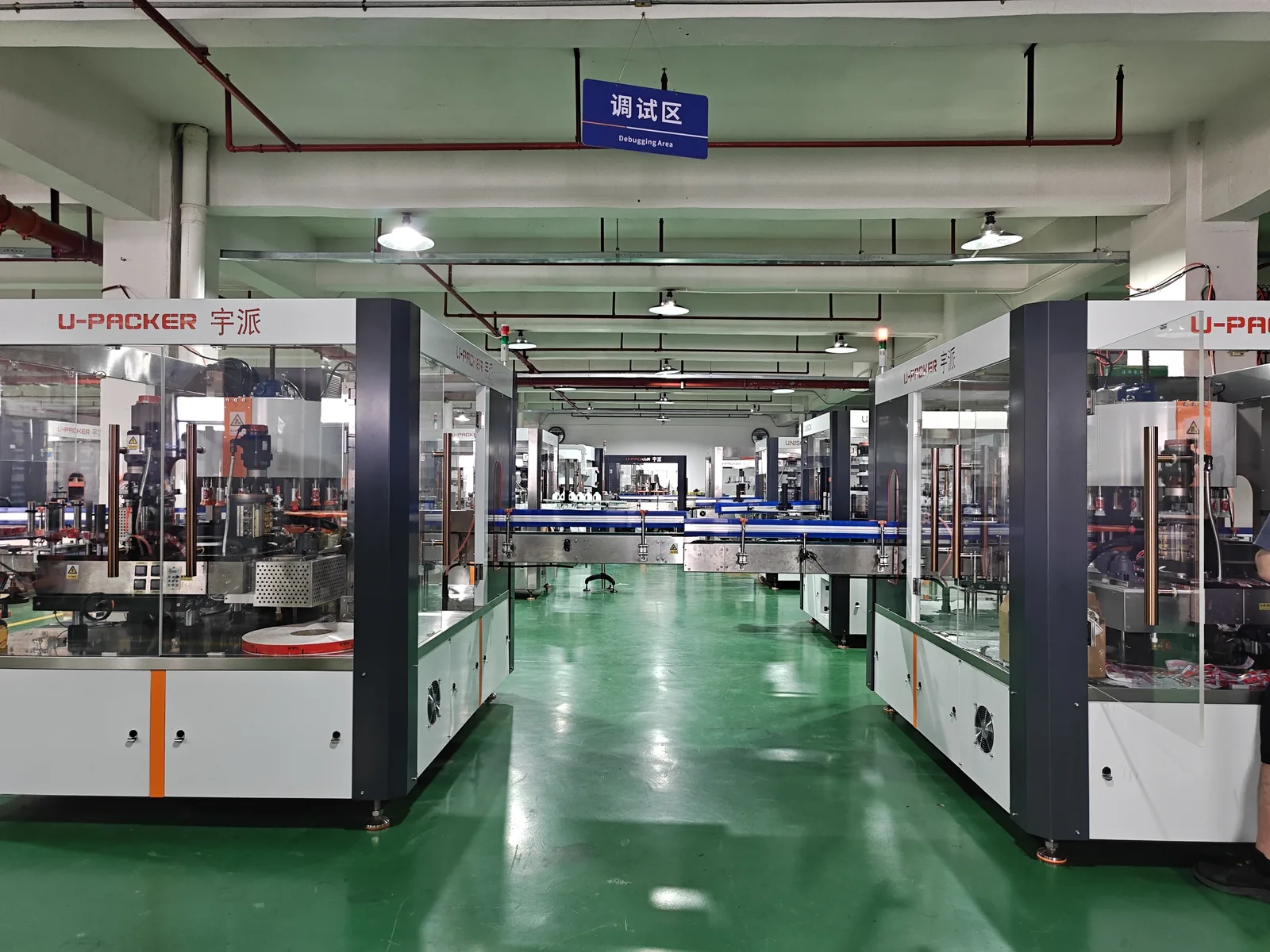
How heavy the maintenance burden will be is largely decided the moment the machine is selected. U-Packer builds "easy to maintain" into the product design: the rotary self-adhesive labeling machine needs no on-site heating or glue preparation — daily care is mostly cleaning and lubrication, with no glue circuit to flush; the mechanical cam labeling machine has a mature, stable structure and simple maintenance, suiting continuous production of fixed products; and the electronic cam labeling machine needs no cam replacement at changeover — recipe templates are called up directly, saving changeover and adjustment time as well.
Preventive maintenance: a daily checklist beats an emergency repair
Waiting for the fault and then firefighting costs time and rarely restores quality. The more effective approach is preventive maintenance: a daily checklist (clean the sensors, verify glue temperature, check air pressure), periodic wear-part replacement, and an equipment file recording every service date and replaced part number. When small anomalies appear — drive noise, slow label-position drift — the file lets you locate the cause early and eliminate the downtime before it happens.
Put maintainability on the purchase checklist
Beyond capacity and precision, three maintenance-related questions are worth asking up front: What is the wear-parts list and its replacement schedule? How many labor hours does daily care take? How convenient is changeover? The answers largely decide whether the machine saves or costs you money over the next few years. For a systematic comparison of processes and costs, see Labeling Equipment for Packaging Lines: Process Comparison, Selection and Maintenance; for matching the machine size to your capacity, see the Round Bottle Labeling Machine Selection Guide. If you are weighing the maintenance cost of labeling equipment, feel free to consult U-Packer engineers — we can provide a wear-parts list and a maintenance plan tailored to your bottles and production line.