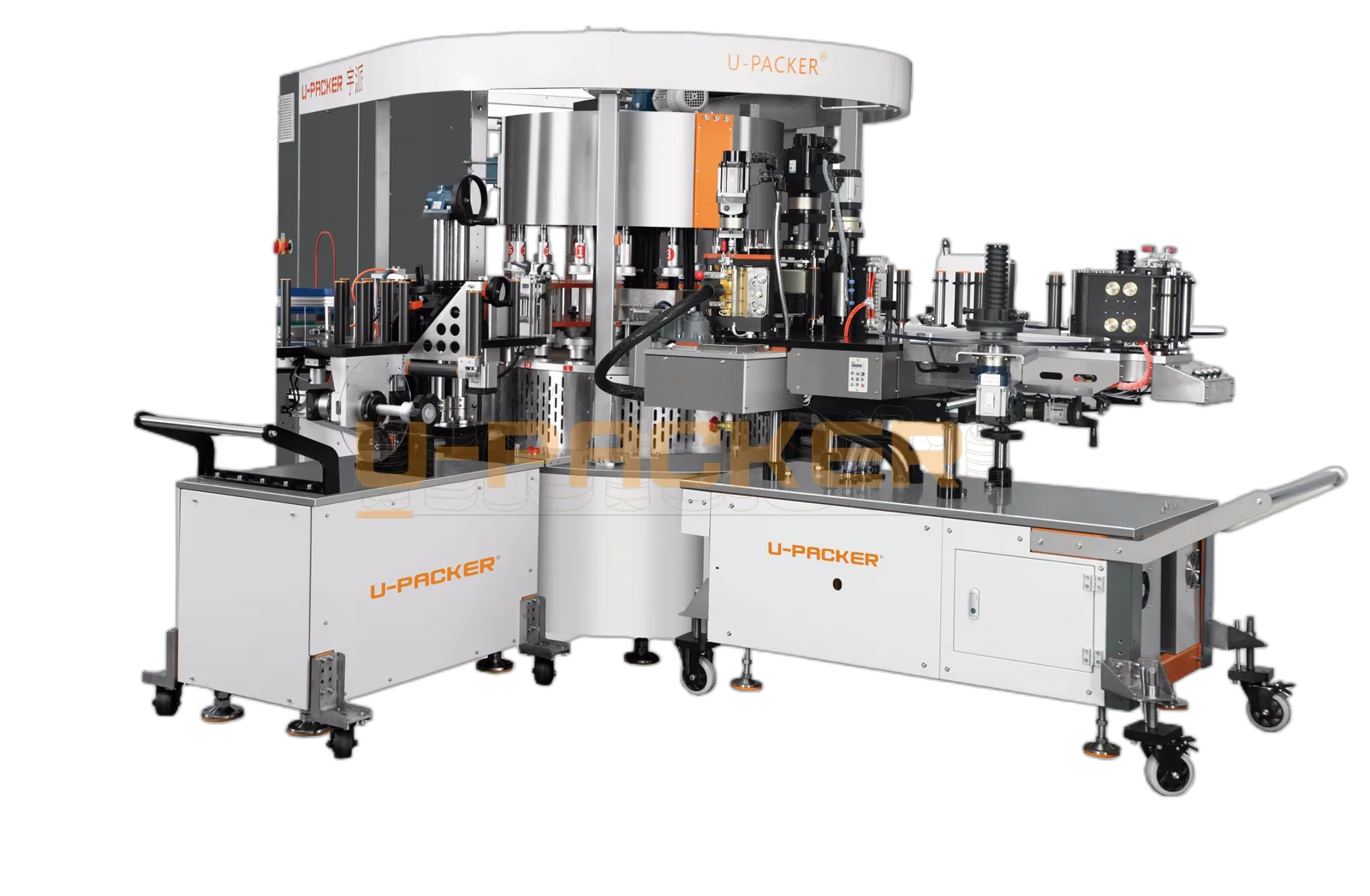
A beer bottle labeling machine for breweries is an automatic labeler built to apply front, back, neck or full wrap-around labels to glass and PET beer bottles straight off the filling line. For a craft brewery running near 5,000 bottles per hour the practical choice is between two processes: hot melt labeling, which wraps roll-fed OPP film around the bottle and glues only the label's overlapping ends at 120-160 °C, and pressure sensitive labeling - the self-adhesive process breweries also call sticker labeling - which peels die-cut paper or film labels from a backing roll and presses them on with no glue and no heating. Both run at ±1mm placement accuracy on U-Packer rotary machines; they differ mainly in label material cost, where roll-fed film typically runs 30-50% cheaper per printed area, and in label flexibility, where die-cut self-adhesive stock allows any label shape without retooling. Also known as a brewery bottle labeler or craft brewery labeling machine, it spans a family from 1,200 bph single-station units for startup breweries to 58,000 bph modular lines for regional and national brands.
What a brewery actually has to label
Craft breweries rarely label one bottle. A typical lineup mixes 330 ml, 355 ml and 500 ml glass bottles plus occasional cans and special releases, each with its own front label, back label and often a neck label - and short runs in between. That production profile matters more than top speed: frequent size and artwork changes favor machines whose changeover is a format-and-roll change measured in minutes, while a single high-speed number matters only when one SKU runs all day.
Bottle quality matters too. Returnable and reused bottles vary slightly in diameter, so the labeler's infeed and bottle fixtures - not just the labeling head - decide whether placement stays at ±1mm across a pallet of mixed bottles. When you request a quotation, send the actual bottle drawings, not catalog ideals; U-Packer runs every quotation on the customer's real bottles before contract.
Hot melt vs pressure sensitive at 5,000 bph
For a 5,000 bph craft brewery, the two processes compare like this:
| Hot melt (roll-fed OPP wrap) | Pressure sensitive (self-adhesive) | |
|---|---|---|
| Label look | Full-body wrap-around film, 360° print surface | Front, back and neck die-cut labels; any shape including contours |
| Label material cost | Lowest - roll-fed OPP film typically 30-50% cheaper per printed area | Higher - die-cut labels on backing paper |
| Glue system | Hot melt applied to label ends only, 120-160 °C | None - adhesive pre-coated on the label |
| SKU changeover | Roll and format change | Roll and format change, equally fast |
| Closest machine at this scale | Rotary UHL-0606Y, rated 6,000 bph | Rotary self-adhesive class, 12,000-18,000 bph |
| Best brewery profile | One or few SKUs at volume; cost-per-bottle focus | Many SKUs, short runs, shaped labels |
The honest verdict: most craft breweries choose pressure sensitive labels for their look and SKU flexibility, and accept the higher label stock cost; breweries that have grown into two or three flagship SKUs at volume switch the flagship bottles to hot melt wrap film and keep self-adhesive for specials. Because both processes run on the same rotary platform family, U-Packer also builds dual-mode machines that do both on one frame - useful when a brewery wants to migrate SKUs without buying a second labeler. The full process-by-process comparison, including maintenance and energy, is in the hot melt vs self-adhesive labeling machine guide.
Which machine fits which brewery
Startup brewery (warming up to 1,200 bph). A single-station rotary OPP labeler labels 1,200 bottles per hour at ±1mm in one compact footprint. It runs the same hot melt end-gluing process as the big machines, replaces hand labeling, and leaves a clear upgrade path - its format parts and glue unit carry across the rotary family.
5,000 bph craft brewery. Size the labeler above the filler, not equal to it. The six-station rotary OPP hot melt labeler is rated 6,000 bph - a 5,000 bph filler runs it at a comfortable cruise with headroom for peak days. For pressure sensitive labels at the same brewery, the rotary self-adhesive class (12,000-18,000 bph) is the entry machine; it sounds oversized, but it carries the same bottle fixtures as the hot melt machine and covers growth without a second purchase.
Regional brewery and beyond. Modular combination lines scale from there to 58,000 bph, mixing hot melt and self-adhesive stations on one frame. All machines in the ladder are listed on the round bottle labeling machine hub, and the labeling capacity calculator converts your filler speed into the required labeler class in one step.
Both processes, running on beer-scale bottles
Rotary hot melt wrap-around labeling on round bottles - the process behind full-body film labels:
Rotary pressure sensitive labeling, applying front and back labels (watch on YouTube):
Cost factors for a brewery labeling line
Machine price scales with stations and frame size rather than brand badge: single-station and six-station rotary machines are quoted per configuration from around USD 50,000, and modular combination lines from around USD 100,000. The bigger cost decision is label material over the machine's life: at craft volumes, the 30-50% per-area gap between die-cut self-adhesive stock and roll-fed OPP film usually outweighs the machine price difference within a few years. Hot melt lines add a glue unit to maintain (glue applied at 120-160 °C to the label ends only, so consumption stays low) but drop the shrink tunnel entirely; self-adhesive lines have no glue system at all. Standard production lead time is 30 days from confirmed configuration, plus sea freight.
Specify your inquiry
For a matched model and an itemized quotation, send: bottle drawings for every bottle size with the dimensions of each labeling face, label artwork with positions and sizes, the label roll or film spec, target bottles per hour for your fastest filler, and your growth plan - breweries that expect to double output within two years should buy the fixtures for it now. U-Packer runs your bottles and labels on the proposed machine before contract and supplies a test video and photo report.
Frequently asked questions
What labeling machine does a startup brewery need?
A single-station rotary labeler is the usual first machine: 1,200 bottles per hour at ±1mm accuracy, the same hot melt end-gluing process as the large rotary machines, and a footprint that fits beside a small filler and capper. It replaces hand labeling immediately and keeps a clean upgrade path - when output grows, the six-station class takes over at 6,000 bph without retraining the crew on a different process.
Hot melt vs pressure sensitive labeling machines for a 5,000 bph craft brewery: which should I choose?
Choose pressure sensitive if your brewery runs many SKUs, short runs or shaped front labels - die-cut labels give the look and the flexibility, and the 12,000-18,000 bph rotary class covers a 5,000 bph filler with headroom. Choose hot melt if one or two flagship SKUs run at volume all day: roll-fed OPP film costs 30-50% less per printed area, and the six-station UHL-0606Y is rated 6,000 bph, right above a 5,000 bph filler. Breweries in between run a dual-mode machine that does both.
Can one machine label 330 ml, 355 ml and 500 ml bottles?
Yes. The rotary platform handles multiple bottle sizes with format changes: bottle fixtures, guides and label rolls swap in a changeover measured in minutes, and electronic cam models store parameter templates per SKU so repeat changeovers are a recall, not a re-setup. Send drawings for every size with your inquiry so the format parts are quoted for all of them at once.
Do breweries use hot melt labels on glass bottles?
Yes - hot melt wrap-around labeling runs on glass, PET and metal round bottles. The machine applies glue only to the leading and trailing ends of the film label, which keeps consumption low, and OPP film needs no shrink tunnel. It is the standard look for high-volume water, CSD and beer brands; craft breweries usually adopt it once a flagship SKU justifies film economics.
How fast should the labeler be relative to my filler?
Size the labeler one class above the filler. A 5,000 bph filler pairs with a 6,000 bph class machine, so peaks and ramp-ups never starve the line. The labeling capacity calculator converts your filler speed into the required class, accounting for label heads per bottle.
How much does a brewery labeling machine cost?
Quoted per configuration: single-station and six-station rotary machines start around USD 50,000 depending on stations and frame, modular combination lines around USD 100,000. Budget label material as the larger line item over time - die-cut self-adhesive stock typically costs 30-50% more per printed area than roll-fed OPP film.
Do I need to send you my bottles?
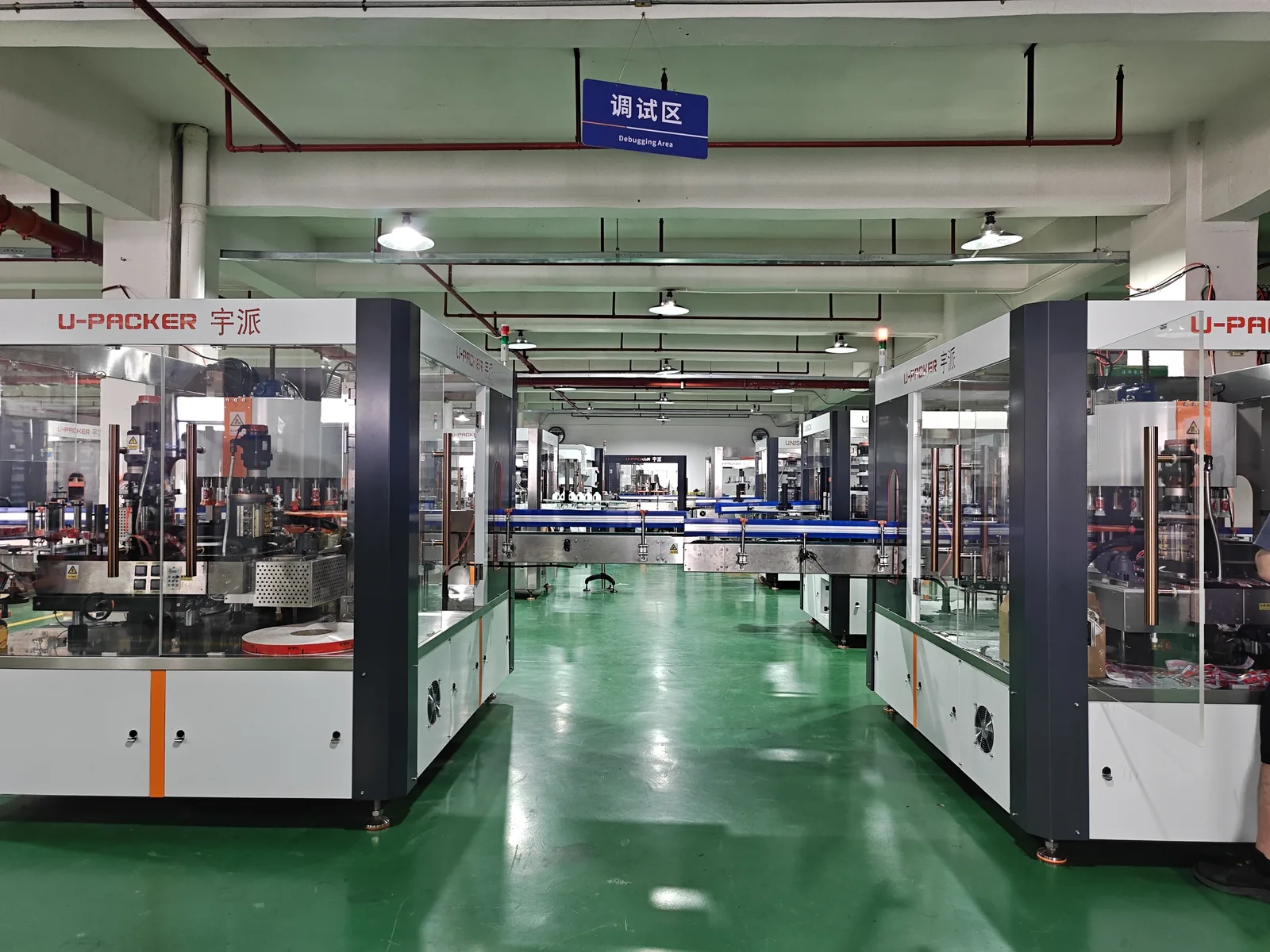
Yes. Every machine is factory-tested on the customer's own bottles at rated speed before it leaves the Guangzhou workshop - you receive a test video and photo report before shipment. For breweries, this also verifies placement across the real diameter spread of returnable bottles, not just catalog dimensions.