
News — U-Packer Company News / Industry Insights / Labeling Technology
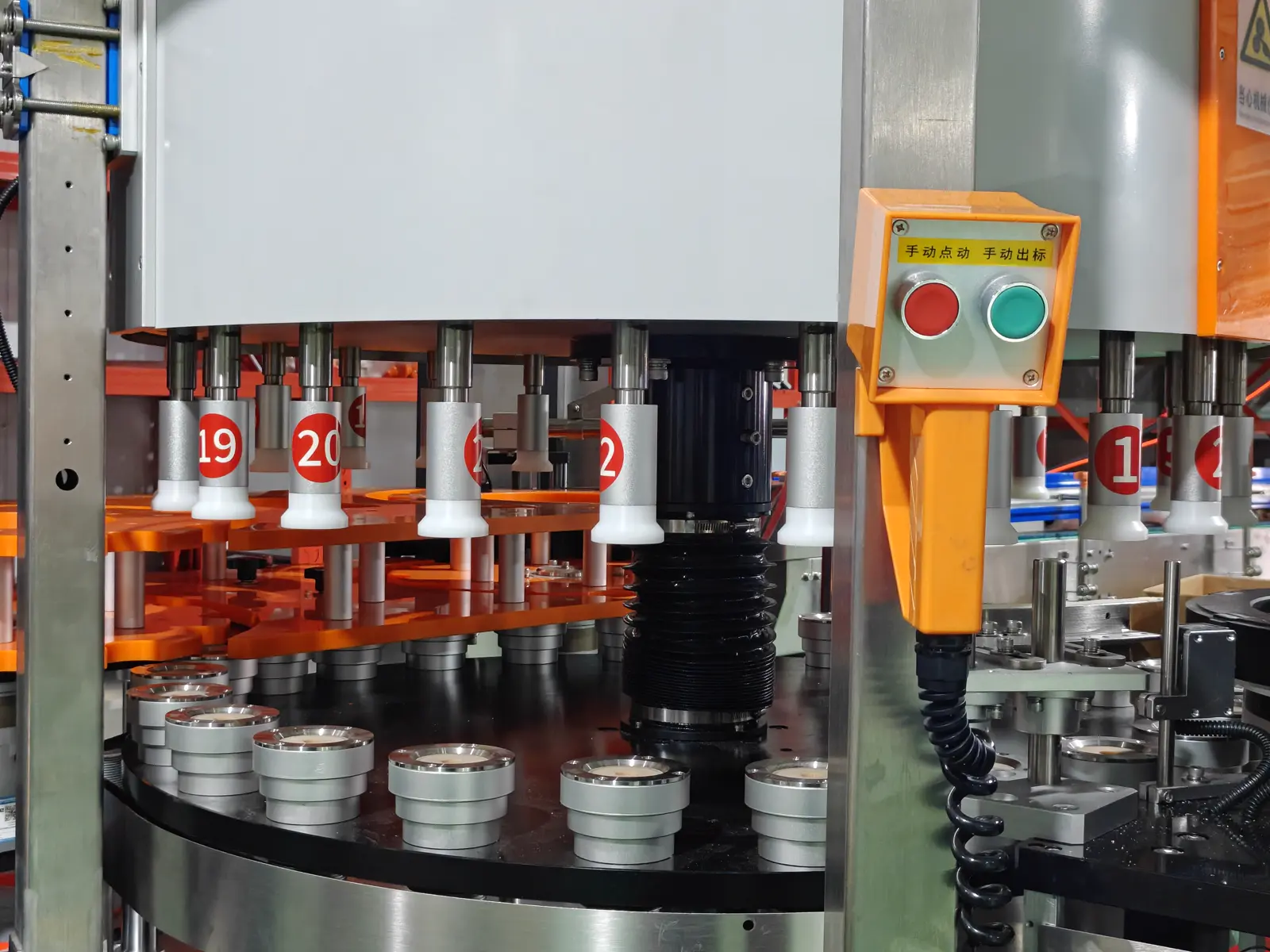
Back labels scattered across the shelf, wrap-around labels wrinkling over the mold seam, oval bottles labeled on the edge and scrapped — with ±1 mm labeling accuracy, why do these defects still happen? The root is usually not accuracy but the angle the bottle happens to be turned to when it enters the labeler. Written from the line's pain points, this article explains the value of vision positioning, introduces U-Packer's capability — multiple cameras with the bottle-holder servo on the electronic cam platform achieving ±1 mm positioned labeling — and shows how one sample test tells whether your bottle is a fit.

On-spec labeling precision does not mean correct labels — mislabeling and date-code errors are the top cause of food recalls. This article explains what post-labeling vision inspection checks along the three tiers "present — straight — correct", how to choose between the 2D and 3D routes, and how AI cuts false rejects and changeover time, closing with selection points for medium- and high-speed lines and the same-source integrated solution from U-Packer.

The first step in choosing a round bottle labeling machine is fixing the output bracket. Using real U-Packer UHL-series parameters, this guide splits 1,200–58,000 bottles per hour into four brackets — single-station entry, 6–12 station multi-variety, 16–20 station high-speed workhorses, and 32-station or full-line bulk — plus three verification checks (speed headroom, per-station cycle, label limits) and acceptance points for sample-run trials.
A comparison of the three mainstream labeling processes — self-adhesive, hot-melt and sleeve — covering label material costs, container compatibility and operating conditions, with a selection checklist built around container shape, cam type and line speed.
Ten minutes of unplanned labeling machine downtime is enough to block an entire packaging line — Siemens research finds large plants lose an average of 27 hours a month to unplanned downtime, with every downtime hour costing FMCG producers around $36,000. This article puts a number on the maintenance account of labeling equipment: most missing, skewed or lifted labels trace back to three everyday causes — dirty photoelectric sensors, glue temperature drift and overdue wear parts — and choosing the right process and cam type lowers the maintenance burden from the day of purchase. Three maintenance questions to ask before buying are included.
Self-adhesive labels are among the most widely used packaging identification materials, and demand keeps expanding with logistics, e-commerce, food and beverage, pharmaceutical and personal care industries. This article reviews global market growth, segment demand, and the green and functional trends reshaping the industry.

Effective May 8, 2021, U-Packer moved to a new address: Room 301, 3rd Floor, Building A1, No. 2 Chuangli Road, Yongning Street, Zengcheng District, Guangzhou. Thank you for your long-term support and cooperation.

upakovka 2020 concluded on January 31, 2020 at Expocentre, Moscow. During the four-day show, the U-Packer booth drew crowds with live labeling machine demonstrations and in-depth business discussions.

ProPak Asia 2019 was held on June 12–15 at BITEC, Bangkok. U-Packer presented its latest labeling machines at booth B4813, drawing a steady stream of visitors from around the world.
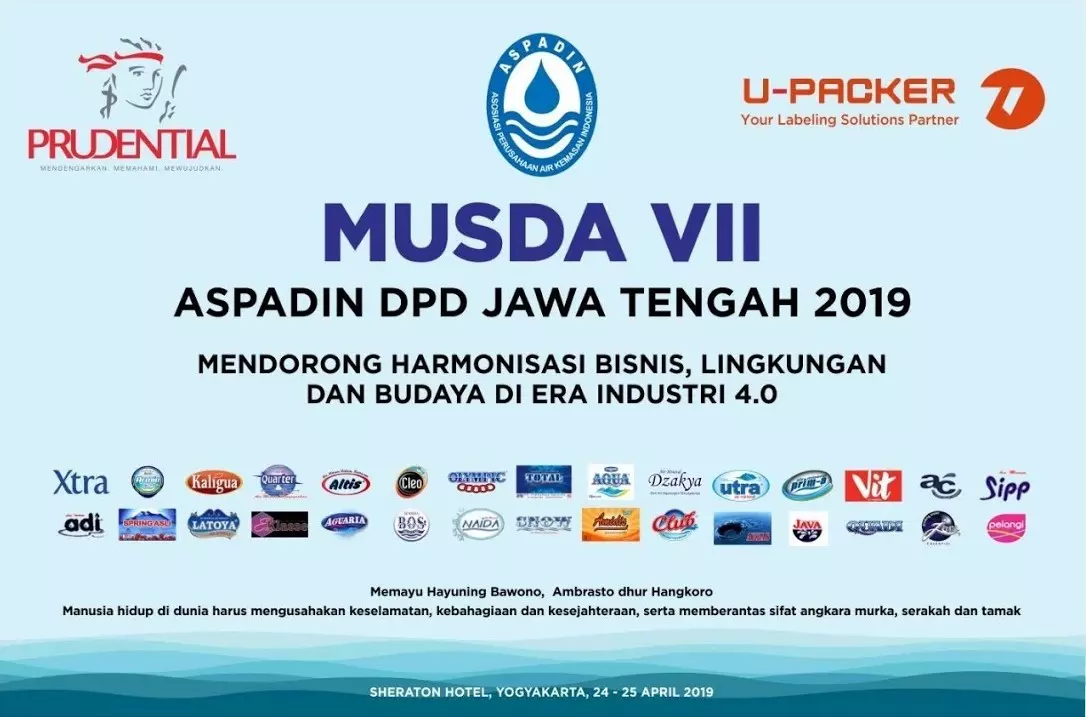
Guangzhou U-Packer Automation was invited to the Aspadin DPD Jawa Tengah 2019 gala — a series of events organized by the Indonesian drinking water association, including the ASPADIN Quality Awards, an industrial exhibition, and an Industry 4.0 seminar.

upakovka 2019, the annual professional exhibition for industrial products, packaging, printing, and processing, brought more than 20,000 industry and academic professionals from around the world to Moscow.
The PLC-based automatic self-adhesive labeling machine applies rolled self-adhesive labels onto flat, uneven, or cylindrical surfaces of packaging containers. This article explains its basic labeling principle, from bottle separation to label dispensing and pressing.
Show More