
Labeling Technology — U-Packer News
Back labels scattered across the shelf, wrap-around labels wrinkling over the mold seam, oval bottles labeled on the edge and scrapped — with ±1 mm labeling accuracy, why do these defects still happen? The root is usually not accuracy but the angle the bottle happens to be turned to when it enters the labeler. Written from the line's pain points, this article explains the value of vision positioning, introduces U-Packer's capability — multiple cameras with the bottle-holder servo on the electronic cam platform achieving ±1 mm positioned labeling — and shows how one sample test tells whether your bottle is a fit.

On-spec labeling precision does not mean correct labels — mislabeling and date-code errors are the top cause of food recalls. This article explains what post-labeling vision inspection checks along the three tiers "present — straight — correct", how to choose between the 2D and 3D routes, and how AI cuts false rejects and changeover time, closing with selection points for medium- and high-speed lines and the same-source integrated solution from U-Packer.

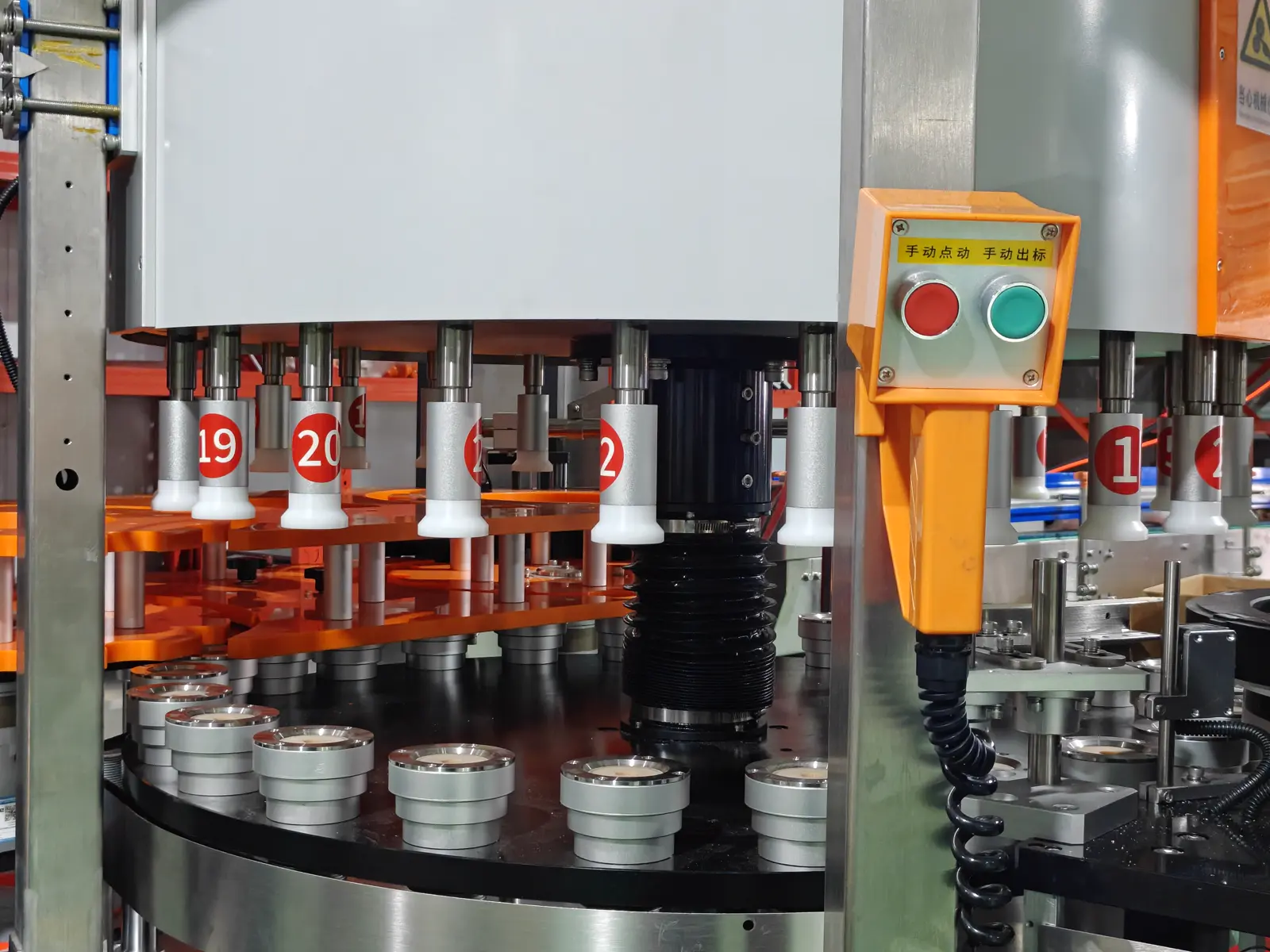
The first step in choosing a round bottle labeling machine is fixing the output bracket. Using real U-Packer UHL-series parameters, this guide splits 1,200–58,000 bottles per hour into four brackets — single-station entry, 6–12 station multi-variety, 16–20 station high-speed workhorses, and 32-station or full-line bulk — plus three verification checks (speed headroom, per-station cycle, label limits) and acceptance points for sample-run trials.
Ten minutes of unplanned labeling machine downtime is enough to block an entire packaging line — Siemens research finds large plants lose an average of 27 hours a month to unplanned downtime, with every downtime hour costing FMCG producers around $36,000. This article puts a number on the maintenance account of labeling equipment: most missing, skewed or lifted labels trace back to three everyday causes — dirty photoelectric sensors, glue temperature drift and overdue wear parts — and choosing the right process and cam type lowers the maintenance burden from the day of purchase. Three maintenance questions to ask before buying are included.
The PLC-based automatic self-adhesive labeling machine applies rolled self-adhesive labels onto flat, uneven, or cylindrical surfaces of packaging containers. This article explains its basic labeling principle, from bottle separation to label dispensing and pressing.
Show More